22+Creative Bedroom Lighting Ideas for a Warm and Relaxing Atmosphere
You can have the most carefully chosen furniture, the perfect paint color, and beautifully layered bedding and the room still feels wrong at night. Flat, harsh, uninviting. You walk in, switch on the overhead light, and suddenly everything looks like a budget hotel.The problem is almost never the room itself. It is the lighting strategy, or more accurately, the absence of one.Bedroom lighting ideas that actually work are not about buying expensive fixtures or following trends. They are about understanding how light behaves in a bedroom at different heights, from different angles, and at different color temperatures and then using that understanding to build a lighting environment that shifts from practical in the morning to genuinely beautiful at night.
The Cove LED and Track Light Combination: Architecture as Light Source

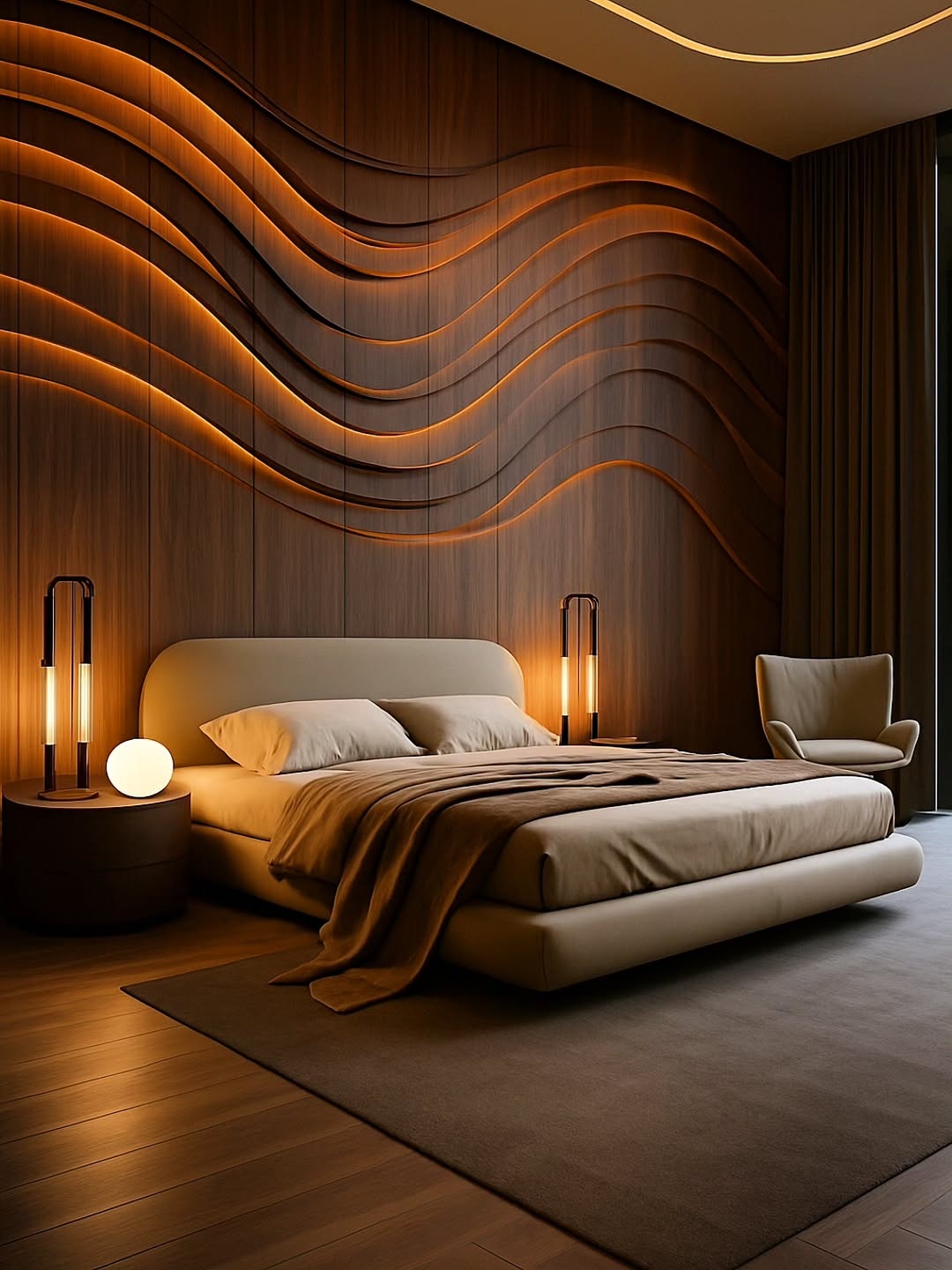
The most transformative single lighting decision you can make in a bedroom is installing warm LED strip lighting inside a ceiling or wall cove rather than relying on surface-mounted fixtures.In a dark, moody bedroom with rich materials, a cove LED running along the top of the headboard wall does something no lamp can replicate. It pushes warm amber light downward across the full length of the wall’s surface, creating a continuous wash of warmth that makes every texture on that wall visible and dimensional. Flat wall surfaces become architectural. Wood grain comes alive. Plaster shows its depth.Together, cove LED and track lighting create two light layers at two heights: architectural ambient at ceiling level, and directional accent mid-room. This vertical separation of light sources is what gives a room its sense of dimension in the evening.
The Japandi Bedroom With Plaster Texture Panel: Why Backlit Surfaces Work Better Than Lit Rooms

There is a principle in hospitality lighting design called task-to-ambient ratio the relationship between focused task light and general fill light in a room. In the best hotel bedrooms, this ratio heavily favors ambient. The room is never fully bright. It is layered with sources that each contribute warmth without flooding the space.The backlit plaster texture panel above the bed in a Japandi-style room demonstrates this principle at its most refined. The LED strip installed at the top edge of the plaster panel pushes light downward across the deeply textured surface. Because the plaster has ridges, cracks, and natural irregularities, the directional light from above creates dramatic micro-shadows within the texture. The panel does not just glow it reveals itself.Pendant lamps with paper or woven shades at nightstand height add the second layer. These are positioned at the height your eyes are at when you are lying down — which means they create intimate bedside warmth without any ceiling reflection or overhead glare.
The Marble Platform Bed With Under-Bed LED: How Ground-Level Light Creates Floating Space

Under-bed LED lighting is one of those ideas that looks like a styling trick in photographs but is actually performing real spatial and psychological work in a room.When warm LED strip lighting is installed along the underside perimeter of a bed platform, it creates a glow at floor level that makes the bed appear to float. Your eye reads the light between the bed base and the floor as negative space a gap of warm air which gives the bed a weightlessness that no amount of styling can achieve.In a room where the bed platform is marble or stone, this floating effect is amplified because the floor material is already reflective. The warm LED light bounces across the floor surface and extends the glow outward from the bed in a pool that warms the surrounding flooring without illuminating it directly.
The Biophilic Green Bedroom: Edison Bulbs and Warm Climbing Light

Edison bulbs the amber-tinted filament-visible incandescent-style bulbs produce light which is the warmest electric light available outside of candles. In a room with green walls, natural wood, and trailing plants, this ultra-warm light source does something specific: it amplifies the brown and amber tones in the wood while enriching the green of the plants, making the organic elements in the room appear more vivid and alive.The LED strip installed at the base of the green accent wall and behind the upper shelf pushes warm light upward across the wall’s texture while simultaneously backlighting the trailing plants hanging down from the shelf. The plants become silhouetted against the warm wall glow, which creates a layered effect some leaves visible in detail, others as warm shadows that no single direct light source could produce.
The Mirror Panel Bedroom: How Reflected Light Multiplies Warmth

Mirror panels as a headboard wall treatment change the physics of bedroom lighting in a specific and useful way: every light source in the room appears twice.The copper geometric pendant lamps flanking the bed create warm amber pools at bed height. In front of a flat wall, these pools illuminate only what is directly in front of them. In front of a mirrored panel wall, they illuminate the room and also reflect back into the room from the mirrored surface doubling the apparent light output without adding any additional fixture.This multiplication effect is most useful in bedrooms that are smaller or that have limited natural light. A room that might feel dim with two pendant lamps against a dark wall feels generously lit when those same pendants reflect across a mirrored surface. The mirror is not just a decorative element it is a passive lighting amplifier.The ceiling LED cove traces the perimeter in warm light that the mirrors then reflect as a soft ceiling glow. Three light sources, all multiplied by reflective surfaces, produce a room that feels warmly lit from every direction without a single harsh point of illumination.
The Galaxy Ceiling Bedroom: When Light Becomes the Architecture

A fiber optic or LED point-source star ceiling is the most experiential bedroom lighting idea in this article. It functions on a different logic from every other approach here: instead of lighting the room, it makes the ceiling the room’s primary experience.The ceiling in this room is covered with a crystalline or fiber optic material that creates thousands of individual light points across the ceiling plane the impression of lying beneath a clear night sky. The surrounding LED cove at the ceiling perimeter provides just enough ambient warmth to make the bed and floor visible, while the star ceiling above exists in its own register, unrelated to the room’s practical lighting needs.The raised platform bed with perimeter LED lighting brings the ground-level warmth layer. With the star ceiling above and the glowing platform below, the sleeping surface is sandwiched between two light environments overhead darkness punctuated by stars, and warm amber ground light. This vertical light composition is experienced most powerfully when lying in the bed looking upward, which is precisely the position a bedroom occupant spends most time in.
The Amber Cove Bedroom: The One-Light-Source Approach That Actually Works

Every lighting article tells you to layer your sources. This room makes the opposite argument, and it makes it convincingly: a single warm LED cove running along two walls at ceiling perimeter, combined with two small bedside lamps, can be more restful and more beautiful than any elaborate multi-fixture scheme.The reason it works is color temperature consistency.The ceiling cove, the bedside lamps, the wall, the bedding, the curtains every surface glows with the same warmth because every light source in the room is at the same color temperature. There is no cool-warm conflict, no area of the room that reads differently from another.The mushroom-shaped bedside lamps in matte black are chosen for their shade design the downward-facing dome directs all light downward onto the nightstand surface, preventing any upward glare that would compete with the ceiling cove warmth above. Every light source is facing the same direction: downward. The room is lit from above with a halo, from the sides with downward-facing lamps. No light is fighting any other light.
The Brass Wall Sconce: Why Bedside Lighting Height Matters More Than Fixture Style

Wall-mounted bedside lighting is consistently underused in bedrooms.The brass double-arm sconce shown here solves both problems. It mounts to the wall at the ideal height, it directs light downward from two offset arms that create a warm pool exactly where a reader needs it, and it frees the entire nightstand surface for practical use. The brass finish warms the adjacent dark wall material every dark surface needs at least one warm metallic element to prevent it from appearing cold and the slender form means the fixture is visible but not dominant.
Frequently Asked Question
What color temperature is best for bedroom lighting?
2700K is the standard for bedrooms. It produces warm amber-white light that supports melatonin production and creates the visual warmth that makes rooms feel relaxing.
Where should LED strips go in a bedroom?
The most effective positions are ceiling cove perimeter, headboard wall top edge, and under the bed frame perimeter.
Do I need more than one lighting source in a bedroom?
Yes, always. A single overhead source flattens a room and creates harsh shadows. The minimum effective combination is an overhead or cove ambient source plus two bedside sources.
What type of bedside light is better: table lamp or wall sconce?
Wall sconces at the correct mounting height are functionally superior for reading and practical use because they free up nightstand space and direct light at the right angle. Table lamps work well when a nightstand is tall enough to bring the lamp to reading height.
Can LED strips replace normal bedroom lights?
LED strips used as cove lighting can replace overhead ambient fixtures entirely in bedrooms where the ceiling height allows for a proper cove installation.
Conclusion
Bedroom lighting ideas that genuinely transform a room share one characteristic: they treat light as a design material rather than a functional necessity. The position, temperature, and direction of every source is a considered decision that affects how every other element in the room looks and how the occupant feels within it.A bedroom where the lighting has been properly resolved feels different the moment you walk in at night. Not staged, not dramatic in a self-conscious way just genuinely warm, genuinely restful, and exactly like somewhere you want to be